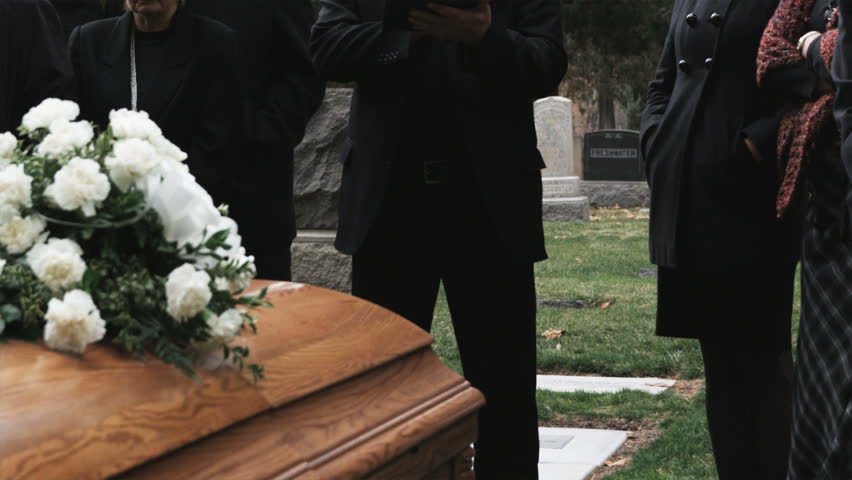
Living Wills in New York May be Useless

There are few rational reasons to having a Living Will in New York, almost no legal benefits to having one, and Living Wills may cause more confusion than guidance in your final days of life. There are several misperceptions concerning what a Living Will actually is. For starters, the very name “Living Will” is a misnomer: It is neither a living document (because it discusses your desire to have someone “pull the plug” on life sustaining measures), nor is it a will (a document which distributes property upon your death). Some people refer to this document as an “Advanced Directive”, but I am pretty sure the Advanced Directive is a Star Trek term regarding Captain Kirk’s alien kissing fetish or

Read More

Don’t Die Alone in Your Apartment

Few of us choose when we die, but where we die can raise difficult legal consequences. Your family may face legal hardships when you die alone at home. If you are the sole resident of your home and die in the home alone, several parties – including the local police – show up to remove your body and “police tape” your front door. This is the equivalent of having yellow and black “Crime Scene” tape around your home. Once this happens, if your family enters your home they could face criminal charges. While the authorities will take steps to safeguard your pets, everything else in your home – from your jewelry and personal belongings to prescription drugs – are just

Read More

Hey, Mom & Dad: No One Wants Your Stuff

No one wants your stuff after you die. Your restored love seat from 1894, your 3rd generation silverware and fine china dining set, your mud-stained Jimi Hendrix t-shirt from the Monterey Pop Festival, these cherished items that gave you cherished memories and a sense of purpose on this planet are little more than garbage and a hinderance in the eye of other people. So why is it some people go to such great lengths to leave certain items of personal property to specific individuals? Case in point: I met with a couple who squabbled amongst one-another how to split up the family artwork. These people were not art collectors, they were average Joes and Janes who on a whim bought stuff

Read More

Landlords: Beware of Old, Loner Tenants

New York landlords can have a lot of problems with older tenants. Not only do older tenants often have stabilized rents which leave the landlord with a 75% haircut on the rent they collect, older tenants also tend to call in more complaints against their landlords. And just to stick it to their landlord one last time, older tenants often make it impossible for the landlord to re-lease the apartment for months after their deaths. I know, crying for landlords is like crying for the football fan at the Superbowl because he is watching from a luxury box on the 40-yard line instead of the 50 yard line. And I am probably not going to earn a lot of street

Read More

Dead Before His Time: Kobe Bryant and His Possible Estate

I remember being a college student when I first saw the future phenom of the Los Angeles Lakers play for the first time. He was 16 years old, grew up in Italy, seemed like a good kid, and his relentless drive to win was only equaled by his controlled contorting drives to the basket. I lived in Southern California when Kobe, Shaquille O’Neal, and a host of great supporting players won the Threepeat NBA championships of the 2000s. It was a well-known fact that Bryant’s Give-ME-The-Ball style of play, insistence on taking impossible shots and general separation from his colleagues made him incredibly unpopular with his teammates, but he sunk the big shots and the endorsements came pouring in. Kobe

Read More

The Many Risks of “Deathbed” Estate Planning

I can appreciate that planning for your own demise years before your death is not as exciting as planning your next K-Pop karaoke face-off (or any other activity imaginable for that matter). Yet many people fear death so much during their healthy and convalescing periods that they take no estate planning actions whatsoever in the hopes that ignoring this 12,000 pound gorilla will make it just go away. It doesn’t, so many estate planners are – frankly too often – called in during a new client’s final living days to draft their Will, create and fund trusts, or update beneficiary designation forms. These last-ditch “Deathbed” Will signings do not achieve their desired end result an inordinately-high amount of the time

Read More

When Should I NOT Act as Mom’s Executor?

When your mom passes away with a valid Will and property being transferred by that Will, the Will is submitted to the Court who appoints an estate representative to wrap up her final affairs. This person or company – almost always named in the Will – is known as the Executor, and has the ability to do everything that your mom could do during her life: Collect her assets, pay creditors, review all of mom’s financial records and statements, file income tax returns, order her medical records, distribute her property as mom’s Will states, and even clean out mom’s closet (which she likely neglected to do before she died since, you know, she’s now dead). We say an Executor “steps

Read More

Unsigned Wills Are Meaningless (and Photocopies are Not Much Better)

I like to remind people that the laws regarding modern U.S. Wills, not only predate the founding of the U.S., but actually predate European discovery of the Western Hemisphere. In Olde England in the city of York having a signed, witnessed piece of paper instructing how you wanted your property to be distributed after your death was often the only way to ensure your desires were fulfilled. Original paper mattered back then – there were no other recording devices or accounts with beneficiary designations – and witnesses would later attest to the fact they had seen you sign said paper instead of someone else. And original, signed paper still matters for several legal documents today, including your Will. The issue

Read More

Facebook After Your Death: Enter the “Legacy Contact”

  My Grandpa Joe died in 2012 at the age of 90, but before he passed he was able to figure out how to set up a Facebook account – no small feat for a man born before the invention of refrigerators, Ford’s Model T and frozen food. So, you can imagine my surprise when my Facebook account suggested I might want to “Friend” my grandfather in 2014. While Friending a deceased individual seemed novel, I sensed that continuing our actual relationship was one of the few things beyond Facebook’s ability to monitor. But while the law has slowly figured out that an Executor or Administrator of your estate is legally permitted to access your personal email and social media

Read More

The 4 Ways (and Best Way) to Leave Property Using Your Will and Trust

If you have not already, one morning you will wake up and finally accept the fact that one day you shall die. Not an easy thought but coming to this inevitable conclusion earlier in life has the benefit of allowing you to plan for the things that remain when you pass: Your family, friends, legacy, and money. And while you can use accounts that name beneficiary designations to transfer some property – such as retirement plans, life insurance, and transfer-on-death accounts – only Wills and Trusts allow you to transfer property at the point-in-time you desire (such as a beneficiary attaining a certain age), and include protections for beneficiaries (from creditors, spendthrift behaviors, special needs and addiction). But how much

Read More

How to Write Your Own Eulogy

Only you can tell your story from your point of view. So, it comes as a surprise that many people have no written recounting of their life. In addition, it is sometimes easier to keep certain thoughts and feelings secret until you have passed away, but if you have taken no steps to memorialize how you want to deal with your loose ends, your unfinished business will remain unfinished.   Remember the difference between a Eulogy and an Obituary: An Obituary is often an objective, somewhat-cold fact-based notice of your death; a Eulogy is a speech at your funeral meant to paint a picture of who you really were.   A good Eulogy contains the following chapters:   Origin: When

Read More

Life-Draining Probate? It’s Probably the Court’s Fault

There are many, many attorneys who are not experienced in handling New York Surrogate’s Court cases or qualified to handle anything except the easiest Probate. This article isn’t about them. This article is about how an agonizingly-long, Probate of a Will is most likely the Court’s fault.   New York’s Surrogate’s Court used to be the Unified Court System’s neat china doll in a house full of dirty toys: Every clerk in every county was professional, smart and helpful (except Queens County, they were awful), Probates moved forward quickly, and questions were answered on the spot. Yes, certain counties did things “their way” (I.e. NOT the way the Surrogate’s Court Procedures Act outlines how Probate should be administered), but not

Read More

Don’t Leave Money to Charity Using Your Will

Charities receive some of their largest gifts upon the passing of a benefactor. While this is a kind gesture on your part, if you live in New York you should leave money to your preferred charity using any method other than your Will.   Probate is Annoying: Probating a Will requires New York’s involvement, meaning Probate can be an expensive, tedious and slow process. You will need to both place the charity on notice that they are a beneficiary under the Will, send them their funds, and procure a Release from the charity. All of this takes time, meaning an attorney is billing for all of this.   Attorney General’s Involvement: As if New York’s courts weren’t inefficient enough for

Read More

What and When Should I Tell My Kids?

Parents who have gone through the estate planning process typically ask what information they should share with their children and when. The answer requires balancing many factors, but can be boiled down to a simple concept: Take responsibility and own up to your decisions, and don’t leave it to your kids to fight about it. First, if a child has been left out of a Will or is receiving less money than other siblings you may want to tell them so, and why. Clearly this is not a universal approach, but taking responsibility and informing them up-front allows the child to reconcile this fact. This will also help minimize your other children having to deal with the dispossessed child’s bitterness

Read More

“Name That Witness” (to Your Will)

When you execute your Will you MUST have it witnessed by at least two competent adults who are not beneficiaries in the Will. When you die New York’s Surrogate’s Courts require the names of the witnesses to be listed in the Probate Petition. And so it is nothing short of stupefying to me how many Wills have witness signatures that are completely illegible. This is somewhat understandable if you execute your own Will, since non-attorneys are not in the business of drafting Wills.  The signers of illegible signatures are also more easily identified in the event it was the Testator’s friends or neighbors who signed (and thus the identities of the witnesses are more easily deduced). But many attorneys’ witnesses

Read More

“Don’t Forget About BoBo: Pet Trust for Your Animal Companion”

One of my dearest aging clients have a dog named Bo Bo. Bo Bo is a true companion to this couple: They are in their 90s and have outlived many of their friends, the husband is more mobile than his wife and likes to get physical activity by walking Bo Bo, and the dog is absolutely in love with them. Bo Bo also smells bad, barks at the littlest disturbance, is a manic that constantly jumps on visitors, (and gets slobber and fur on my suit, which needs to be dry cleaned after every single visit) and is begrudgingly tolerated (at best) by anyone other than my clients. Unfortunately,  when my clients pass to the eternal human boneyard, Bo Bo’s

Read More

5 Times You DON’T Pay a Deceased Person’s Credit Card Bill

The weeks immediately following a family member’s death is tense, emotional and stressful; many people rush to handle the departed person’s affairs. This includes paying the deceased person’s debts, since every credit card company comes out of the woodwork the moment the card is cancelled by the survivors. However, many family members pay these bills even though they had no responsibility to do so.   Here are 5 instances when you should NOT pay a deceased person’s debts:   Retirement Plans: Remember that your retirement plans are protected from most creditors, including credit cards. If the decedent died with only retirement plan assets remaining in his name, tell this to the credit card company and don’t pay them anything.  

Read More

The Top 5 Things to Do When a Family Member is Terminally Ill

Watching a person’s last days of life is often a horrible, gut-wrenching process. The dying individual may or may not be able to communicate, and the trauma of seeing a loved one approaching their end makes it difficult for spectators to make decisive decisions. But no matter what the case, if you want to do what is best for your family, you must utilize the precious remaining days of your loved one’s life to take action on certain items, as these matters get much more difficult and stressful upon his or her passing. Figure Out Funeral Arrangements: May people have funeral plots or pre-paid burial arrangements, but these details are often not formally shared with family and friends beforehand. If the

Read More

Medicaid Pitfalls: Cash Value Life Insurance

Qualifying for Medicaid can be a pain in the neck: You can only qualify for benefits if you have a limited amount of assets and income. Yes, there are some exceptions, but in most cases there are financial limits. Unfortunately, people’s past investment decisions may severely impact their current eligibility.   One of the worst former financial decisions for Medicaid planning is the limits placed on cash value life insurance.   “Permanent” life insurance is meant to last until you reach age 95 or 100, then pay out to you or your beneficiary even if you are still alive. These policies allow you to invest extra money to the policy’s “cash value” so that as the annual cost of the insurance

Read More

Naming Beneficiaries: When to Start (and Stop) Asking “What If?”

My mentor was a meticulous, forward-thinking attorney. When she retired from private practice I succeeded her and took over her client files. As a result, I had the pleasure of reading many of the wills she had drafted (not a recommended activity for narcoleptics who don’t want to fall asleep). She was absolutely scrupulous when it came to naming contingent beneficiaries to an estate. For some of her clients, and indeed for me too at times, it seemed like a maddening process.   Here is a common scenario: I imagine going to an attorney to draft my Will, create beneficiary designation forms, and consider creating a trust. Now comes the moment of truth: When I pass away, who gets what?

Read More

Handling the Empty Nest: Securing the Recently Departed Loved One’s House

When a person passes away there are several matters to take care of, the FIRST of which is securing the premises. One of my biggest concerns is the possible “Dash and Grab” that dishonest (needy?) family members perform when they hear of the recently departed family member and run to strip the house of assets with financial or sentimental value. And, as much as I hate to use stale idioms, “Possession IS 9/10ths of the law.” Here are steps you can take to secure a family member’s personal belongings upon their passing: CHANGE THE LOCKS: If the house was owned by the decedent, consider doing this to protect the property inside. CANCEL CREDIT CARDS / FREEZE BANK ACCOUNTS: Supplying a

Read More

SIBLING RIVALRIES: The Funeral: Who is in Charge?

The first sibling rivalry goes back to the “first” siblings, Cain and Able. It was not the last (though the outcome was a little more dramatic than the average sibling rivalry). Of the many rivalries that have taken place since, one that is too often overlooked is over the parent’s disposition of their remains upon their passing. I have seen situations where one sibling [we’ll call him “brother”] was the local child living with his mother, and the more distant child [“sister”] lived a few thousand miles away. Brother and sister had not liked each other for decades. When mom passed away, brother did not tell sister, and decided to hold a small funeral where mom’s funeral service was highly

Read More

Burial Instructions in Your Will? Don’t Bother

Many people have an idea how they want their remains handled upon their passing, and want to ensure this method is respected. And unless you are like Vladimir Lenin and want the public to view your corpse in perpetuity (though I am not entirely sure he actually wanted this), when you pass away you generally want your remains to be dealt with relatively quickly. In the past people included their desires in their Wills, not knowing where else to state them. A Will has to be accepted by the Surrogate’s Court under the Probate process: (1) This requires an original Death Certificate which you usually get from a funeral home (but remember, the undertaker doesn’t know how to handle your

Read More

“The Doctor is Out”: Medical Practices & Unexpected Death

Modern day medical doctors face a myriad of challenges: Lawsuits, hardships with creating referrals and collecting payments from third-parties (insurance companies and Medicare), onerous requirements of the Affordable Care Act and patient records, and the like. So just when we think the logical conclusion of these hardships would occur (death) we find out just how hard it truly is to be a doctor. A doctor has a requirement to maintain patient records for several years. This requirement does not end at the time of their passing. While today’s insurance environment and staff requirements have effectively made solo practitioners a dying bread, even a small group of doctors may not be prepared to process all of the records of their departed

Read More

DISCLAIMER: Attorney Advertising. Please note that prior results do not guarantee a similar outcome. This site and any information contained herein are intended for informational purposes only and should not be construed as legal advice. Seek competent legal counsel for advice on any legal matter.