Hey Expats: Come Home to Get Your Family’s Money

Hey Expats: Come Home to Get Your Family’s Money     Despite the flaccid threats of political naysayers who threaten to leave the country after every presidential election (only to realize the United States is a markedly better place to live than countries with poutine, meme bans and gulags), some Americans actually do leave the U.S. on a near permanent basis. These novice ambassadors of American culture do typically maintain their U.S. citizenship for several reasons, some of which have to do with maintaining some financial benefit.   But being an expat – or having an expatriated citizen be a beneficiary or fiduciary of your Estate – can lead to a lot of Estate Planning challenges, and post-mortem difficulties that

Read More

New York’s Proposed “Right to Die” Law is Lame

New York’s Proposed “Right to Die” Law is Lame We don’t have a choice to be born into this world, and until recently people were not even given the legal right to leave it on our terms. People helplessly watched their mentally competent loved ones physically suffer during their last few months of life with no right to end their pain. And while society’s opinions regarding more liberal end-of-live options changed long ago, countries and states have only recently passed laws regarding a human’s right to face their death on their terms.   After a moral grudge match between two diametrically opposed philosophies, in 2025 New York’s assembly finally pushed through a right  to die bill, which languished for months,

Read More

No Country for Old Men: Don’t Name an Elderly Executor or Trustee

No Country for Old Men: Don’t Name an Elderly Executor or Trustee   While I don’t have a lot of new material to share during my first consultation with prospects, a popular one-liner I use is “You’re not old until you are 92.” And while Christie Brinkly will be hotter than your college girlfriend and Chuck Norris will still be kick blasting 2x4s when they are nonagenarians, EVERYONE ELSE in their 90s is OLD. And being elderly and an Executor or Trustee can be a bad combination for both fiduciary and beneficiary alike.   In a world where we speak in real time with people 10,000 miles away, transfer millions of dollars with a tap on our cellphone, and travel

Read More

ANOTHER Reason Wills are Cruddy: Testamentary Trusts

ANOTHER Reason Wills are Cruddy: Testamentary Trusts   Yep, I’m here to bash on New York Probate and Wills again, so if you love large legal fees, Court intervention and long waits for unnecessarily complex services, you may want to start watching your favorite rerun of Better Call Saul now.   What would you say if I told you that after going through the many annoyances of Probate you may still be stuck working with the Court for another 20+ years? I’m guessing the words would be colorful, like the post credits scene of that night in college you tried Jello shots. Yes, when you use a Will to protect assets you transfer to other friends and family members, your

Read More

 TREAT YOURSELF: Order Extra Death Certificates

 TREAT YOURSELF: Order Extra Death Certificates   Sometimes the only good thing to come from a person’s death is the money they leave to others. So why do so many families get gun shy spending a few extra dollars for what is arguably the most important document of that person’s post-mortem affairs? It’s totally normal, and always to your benefit, to order many more Death Certificates of your departed loved one than you think you will need, preferably sooner rather than later.     Death Certificates Transfer Everything   Aside from joint accounts, you cannot transfer any property from a deceased person’s assets without a valid (and usually original) Death Certificate. Times you will likely need a Death Certificate to

Read More

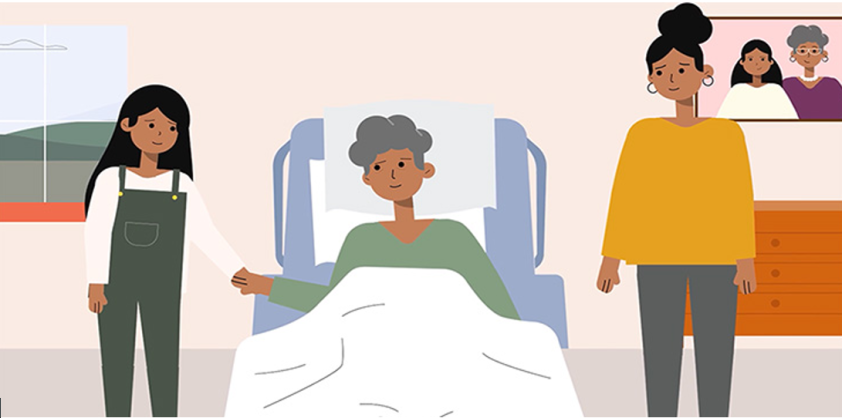
Pregnant and Brain Dead: How to Make Your Living Will Effective

Pregnant and Brain Dead: How to Make Your Living Will Effective     The heart wrenching story of Adriana Smith exhibits both the legal limitations placed on Living Wills, and the impossibility of planning for every potential end of life decision we may have to face. Adriana, aged 30, went from having headaches one day to experiencing deadly blood clots in her brain the next morning, leaving her brain dead. To add to this tragedy, Adriana was well into her first trimester of pregnancy and under Georgia state law could no longer have her life support terminated due to the state’s abortion laws (and no, this article is not going to discuss abortion law, no no no). And while Adriana’s

Read More

When Bill Met Jordan: Does Dad Really Need Protection From Himself?

When Bill Met Jordan: Does Dad Really Need Protection From Himself?   It sounds like the most exhausting romcom script a Hollywood agent has to read since the script where Adam Sandler tried to date Jennifer Aniston for a seventh movie: Aging, successful NFL coach is on a flight, sits next to college cheerleader, orders her a Cherry Mojito, and every category of “journalist” gets a seat at the dinner table. Cheerleader (starring Jordan Hudson) starts dressing scantily and acting like a boss, Coach (played by Bill I’m-Still-Pinching-Myself Belichick) is allowed to visit her dorm room and stream Netflix and stuff. Tabloids and families shriek “Dad is falling under the spell of Young Girl,” Young Girl exerts more influence, buys

Read More

Thinking About Divorce? Sign Your Will First

Unless there is a prenuptial agreement stating your husband or wife gets nothing when you pass away, if you are married when you die your spouse often has several rights to your estate. Some states, such as New York, entitle your spouse to at least 1/3 of your gross estate even if you leave them nothing, and if you own property with them jointly they get all of that property when you die. And even worse, if you don’t do any estate planning your spouse may be the sole beneficiary of your estate. So if your marriage is failing I suggest that you fire the first shot at your partner and disinherit them before you file for divorce. For people

Read More

What You Can Do Now to Help Your Parents Apply for Medicaid

You may have heard it before: Someone’s elderly parent or grandparent breaks their hip or had a stroke or any one of the thousands of things that can happen to us when we start drinking Ensure for lunch, and now the family needs to apply for Medicaid for that person’s long term care needs. But the family members are having all types of trouble finding the necessary documents that Medicaid requires, such as marriage certificates, identification, proof of Social Security, tax returns, copies of all financial statements, the list is pretty lengthy. So, what can your parents do now to help you apply for Medicaid for them at some point in the future? 1.     Draft a Power of Attorney: Having a

Read More

Angry Brothers Agree to Settle (Mom’s Estate)

You never know how close you are to your family until you have to share an inheritance with them. I am wrapping-up a case where my client’s mother died, leaving a Will that equally-distributed her real estate between her two somewhat-acrimonious sons. Usually this apartment would be sold, proceeds disbursed, and everyone would go their separate way. However, my client’s brother insisted that he could make them more money if he improved the real estate. His brother (my client) was not so hip on this idea – none of them had any real estate investing experience – but through sheer force, perseverance and presumption his brother had his own son move in (which he did – with a few kewl

Read More

Should You Treat Your Kids Evenly in Your Estate Plan?

I believe you do not need to treat children equally in your estate plan, even if they are equally responsible, equally financially-empowered, and on good terms with you and one-another. Some parents follow differing distributive patterns under Sharia Law or other cultural edicts, others leave disparate amounts to children if one has several children of their own and the other child does not. In the end, the decision of how to bequeath one’s money is the client’s decision. I had one couple who decided to almost completely disinherit their daughter. She was an active opioid addict for several years, and they felt leaving her substantial money (even if utilizing a trust with a substance abuse provision that would limit her

Read More

4 Reasons Your Family Disinherited You

I often get calls from indignant clients telling me their recently-departed parent or other family member has disinherited them, and they want to know their options. And while proving a Will that disinherits someone is never a foregone conclusion, they are usually walking up to home plate with two strikes against them.   And many times, this was unexpected: The client had no clue why they were cut out of the decedent’s estate. From my experience, it is likely due to one of the following misperceptions you had:   You did not give them enough attention.   Face it: Spending time with elderly and sick people is not usually our go-to option for a Friday night. It can be very

Read More

6 Steps Before You Fund Your Child’s Home Down Payment

I have had an increasing number of clients approach me asking an increasingly-difficult question: “Should I provide my child with funds for her first home down payment, or focus on my own lifetime needs and leave my (presumably larger) estate as an inheritance when I pass away?” This is not an easy decision, since it depend both on the parent’s finances and health issues, and the child’s cash flow and social issues.   Many middle-class parents realize their children’s purchasing power for real estate is significantly weaker than theirs was: Real estate prices have outpaced income growth over the last twenty years, while the number and cost of financial commitments (such as student loan debt and health insurance payments) have

Read More

5 Reasons UTMA Accounts Are Bad

Parents and grandparents sometimes look for easy ways to give money to younger family members. The challenge arises when the recipient is a minor (minors cannot own property in their own name until 18, with some exceptions) and when the donor wants to minimize legal fees. A Uniform Transfer to Minors Act [“UTMA”] account, which leaves funds to the child when he/she turns 21, used to be viewed as an appropriate way to leave funds to a minor now that would be paid out later when he/she reached a more mature age. UTMAs are inexpensive: You only need to set up the account at a financial institution, name an adult custodian for the account, and let the custodian buy a

Read More

How the Probate Court Screws You if You are Old (OR: How to Screw Over Your Family if You Are Disinherited in the Will): Personal Service and New York Surrogate’s Court

Many people have a horror story, how Probating your family member’s Will took years, was a pain in the neck, and Aunt Mildred’s lawyer was to blame. And this is often at least partially true: New York Probates can have unusual complexities that will blindside an unsuspecting attorney. In my last blog I gave several reasons why the Court itself is usually to blame. Now I would like to focus on one way the system itself is faulty: New York’s Surrogate’s Court requires personal service on the next-of-kin.   When a person dies and their Will is being submitted to New York’s Surrogate’s Court it must include (among other things) an original Death Certificate, a Petition requesting the Court to

Read More

No One Likes Your Uncle Marvin: Isolated Aging Men

Many of us have an aging male friend or family member who is unmarried and has no children. This man, also known as your “Uncle Marvin”, is getting older, lives alone, and is probably financially prepared for the remainder of his life. But he may be completely unprepared for the legal consequences of his aging.   Unlike his female counterparts, such as your Aunt May, Uncle Marvin and his male contemporaries are more likely to be emotionally isolated from other family members and socially separated from his community. In addition, our society still erroneously views men as competent, stoic loners who don’t require or desire our involvement with their lives. Even our health care and aging mechanisms are geared toward

Read More

Your Brother is Taking Your (Parent’s) Money

  My grandmother used to counsel her friends with young children by sharing the phrase “Small children, small problems; big children, big problems…”   Some siblings work a lot, take pride in their independence, and save their hard-earned money. And some siblings have bad luck, are victims of financial predators or our legal system (divorce, criminal “justice” matters, etc.), or they may just be lazy. While the stars perfectly aligned for the former children, the latter child gets stuck in a perpetual rut, parents or other family members start financing his lifestyle, and sibling bitterness boils.   Down-on-their-luck children drain family assets, become increasingly disinterested in working, and cause fraternal discontent and animosity. Parental assets that could one day pass

Read More

What and When Should I Tell My Kids?

Parents who have gone through the estate planning process typically ask what information they should share with their children and when. The answer requires balancing many factors, but can be boiled down to a simple concept: Take responsibility and own up to your decisions, and don’t leave it to your kids to fight about it. First, if a child has been left out of a Will or is receiving less money than other siblings you may want to tell them so, and why. Clearly this is not a universal approach, but taking responsibility and informing them up-front allows the child to reconcile this fact. This will also help minimize your other children having to deal with the dispossessed child’s bitterness

Read More

Your Prenup: How Your Family Law Attorney Betrayed You

If you have a prenuptial agreement, chances are that the family law attorney who represented you betrayed you and didn’t even realize it.   I often tell clients to get a prenup if they are getting married later in life, and insist my older clients pay for their child’s prenup. And soon thereafter, much to my dismay, I see yet another prenup that unintentionally-yet-completely screws my client if his or her spouse dies unexpectedly.   Prenups serve one vital purpose: “Split Money.” There is usually a financial disparity between the parties when the couple marries, so the wealthier spouse naturally wants to protect his or her money from the other spouse’s financial grasp after a short marriage. So the prenup

Read More

Second Wives: Reapers of Sorrow, Destroyers of Family Wealth!

In a world where our assets are constantly under threat from usurious taxes, government largess, financial predators and rapacious offspring, there is still NO worse threat to intergenerational family wealth than a second wife.   People get married the first time for any one of a number of reasons: Family pressure, filling a void, the urge to have children, an inexplicable desire to emulate the lives of Al and Peg Bundy and passion.  But these first marriages often end, sometimes with children left in their wake, and are replaced by a second marriage based on love, devotion and emotional security.   In these second (or third) marriages, often one spouse tends to be significantly older and more financially secure than

Read More

The Roadmap to Your Family Should be in Your Will

The cornerstone of Probate, leaving your estate to whomever you want, is almost paradoxical since the process is not as easy as most people think. To the great surprise of heirs that are listed in the Will, the decedent’s descendants (or next closest relatives) must be put on notice during the Probate process to validate the Will. The very concept of the requirement of placing the next of kin on notice is foreign to most clients: Why does a person’s nearest relative, who the Testator may have loathed, still have to be placed on notice of the Probate of the Will, even if that relative is being disinherited? The answer: Our estate laws allow your closest family members the right

Read More

The Top 5 Things to Do When a Family Member is Terminally Ill

Watching a person’s last days of life is often a horrible, gut-wrenching process. The dying individual may or may not be able to communicate, and the trauma of seeing a loved one approaching their end makes it difficult for spectators to make decisive decisions. But no matter what the case, if you want to do what is best for your family, you must utilize the precious remaining days of your loved one’s life to take action on certain items, as these matters get much more difficult and stressful upon his or her passing. Figure Out Funeral Arrangements: May people have funeral plots or pre-paid burial arrangements, but these details are often not formally shared with family and friends beforehand. If the

Read More

Increase Executor Commissions by Including Real Estate Transfers

You have a good deal of latitude structuring Executor’s commissions in a Will. There are many subtleties to default Executor commissions that apply if you don’t substitute them; in order to be fair to your Executor, one that you may want to modify relates to instructing your Executor to transfer real estate under the terms of your will.   In New York, Executor commissions are based on collecting and distributing property, primarily intangible investments. These commissions are easy to calculate, since investment assets are easy to price, transfer and sell. But the family home – typically the largest Probate asset – is not so easy to administer, and is not always commissionable.   If the real estate is sold as

Read More

UTMA Accounts: The Good, Bad and Ugly

Uniform Transfer to Minors Act accounts allow a person to leave funds to a minor beneficiary without a court’s interference.  In general, minors are not legally able to own property. If a minor comes into possession of a bank or investment account or proceeds from a life insurance policy or retirement plan, a court may have to appoint a guardian over the property. UTMA accounts sidestep this requirement by naming a custodian over the funds: the custodian oversees and invests the funds until the minor turns 21 years old.   However, just because UTMAs avoid court oversight, does not mean they are devoid of other problems:   Poor Investment Decisions: A custodian who invests the funds poorly relies on state

Read More

Naming Beneficiaries: When to Start (and Stop) Asking “What If?”

My mentor was a meticulous, forward-thinking attorney. When she retired from private practice I succeeded her and took over her client files. As a result, I had the pleasure of reading many of the wills she had drafted (not a recommended activity for narcoleptics who don’t want to fall asleep). She was absolutely scrupulous when it came to naming contingent beneficiaries to an estate. For some of her clients, and indeed for me too at times, it seemed like a maddening process.   Here is a common scenario: I imagine going to an attorney to draft my Will, create beneficiary designation forms, and consider creating a trust. Now comes the moment of truth: When I pass away, who gets what?

Read More

When Should I Use or Avoid A Joint Trust?

A joint trust is a trust created during your lifetime, where both you and at least one other individual are the Grantors (creators). These are almost always “inter vivos” (created during your life, and not by a will upon your passing), and tend to be done by happily married spouses. While they tend to simplify most people’s estate plans by only having to deal with one document, joint trusts also have a time and a place when they should be avoided.   The most ideal time to utilize joint trusts is when the creators of the trust are (1) married, (2) want the same end-result for the funds, and (3) trust the surviving creator to control the funds when he/she

Read More

Disinheriting Someone? Don’t Use a “Pour-Over” Will

You have a right to leave money to who you want to and, when you have a will, can leave it to those you want: It is not uncommon to disinherit a family member who would otherwise receive an inheritance if no Will existed. However, your nearest family members (some of whom you may have disinherited) are required to receive a copy of the Will when you die. Clearly you do not want these disinherited people giving your choice of beneficiaries a hard time. Many people rightly resort to disinheriting an heir by bequeathing money using a Trust which has no requirement of placing such family members on legal notice. However, there is one regularly-used shortcut that can defeat your

Read More

Trusts: How to Protect a (Troubled) Child from Your Money

Parents: You are responsible for the financial education and well-being of your child. You have more life experience, you are the ones who brought your children into the world, and you are the one leaving your money to them. So take the extra step and make sure you give your children money in a responsible way. We’ve all heard of it: The child who spent all of his inheritance before he received it, the gambler, the substance abuser, spendthrift, and so on. In 2011, I had a 29 year old female client, whom I shall call “Janice” who didn’t have one penny to her name: Janice was living in a homeless shelter, on all types of public assistance, and almost thoroughly ignored

Read More

What is a “Guardianship” for Disabled Individuals?

Many people think of a guardianship as being a legal affair that determines who will raise a minor child (such as a parent, or a non-parent if both parents are unavailable); I shall cover this type of guardianship in the future.  A Guardianship Proceeding over a disabled individual essentially takes place when a person can no longer make financial or health care decisions. There are  two types of Guardianship Proceedings: Those for minors who have always been disabled and are nearing the age of majority, and those for adults who once had mental capacity but no longer do. For people who are disabled as minors the Guardianship Proceeding takes place under New York’s Surrogate’s Court Procedures Act, Article 17-A (lawyers refer to this as a “SCPA 17

Read More

DISCLAIMER: Attorney Advertising. Please note that prior results do not guarantee a similar outcome. This site and any information contained herein are intended for informational purposes only and should not be construed as legal advice. Seek competent legal counsel for advice on any legal matter.