Web Link: The (Only) 3 Reasons You Should Have an Irrevocable Trust
 Downloadable PDF: The (Only) 3 Reasons You Should Have an Irrevocable Trust
 Web Link: The (Only) 3 Reasons You Should Have an Irrevocable Trust Downloadable PDF: The (Only) 3 Reasons You Should Have an Irrevocable Trust

I get a lot of calls from people asking if I can set up an Asset Protection Trust for them. These people usually owe taxes or child support, are contemplating divorce, have recently been the responsible party in an accident or injury to someone else, or anticipate their risky business practices will lead to lawsuits in the future. Despite what they may think, most people in these situations do not want their property owned by an Asset Protection Trust. Asset Protection Trusts are permitted and created in a handful of states (currently 16) such as Delaware, Nevada, Ohio, Alaska and Rhode Island. Trusts created in other states do not have the same level of protection. The idea is that you

A colleague of mine contacted me about a legal issue she was dealing with. Her client had created an irrevocable trust for tax minimization purposes, named his brother (a US citizen) and his sister-in-law (a Canadian citizen) as Co-Trustees, signed the Trust and transferred a life insurance policy to the Trust. For some reason, in the brief period between signing the trust and mailing it to the Co-Trustees, the client succeeded in royally pissing off his brother to the point of being told he would rather eat cold rice (in actuality, he was told something far less palatable) than serve as his trustee. Just to add to this problem, the client had already applied for a Tax ID Number for

The world changes, and so does our family, friends and charitable organizations. And we do too: We start to care more about relationships than money, health instead of inebriation, and sometimes come to an understanding with those people we disagree with. However, estate planning benefits do not always lend themselves to changed circumstances, so if you want creditor protection, government benefits, estate tax savings or the ability to control your family’s inheritance “from the grave” you usually need an irrevocable trust, I.e. one you cannot change even if you desperately need to change the documents. When you create certain irrevocable trusts, you cannot modify them. These trusts are (typically) either the trustee or the beneficiary but never both; you may

While America’s criminal justice system does not judge people to be guilty until proven guilty (even though it has no compunction with adjudicating innocent people as being guilty), Jeffrey Epstein sure does look like a bad, bad dude. The “Pimp of the Rich and Famous” would have been charged with human trafficking, statutory rape, prostitution, and likely many more demented crimes which thinking of would cause most decent people to throw up in their mouth a little bit. His trial and any plea bargain could have been an enormous bombshell that would have ruined at least a few people with HUGE shoes to fill. It was in this context that Jeffrey Epstein somehow hung himself from a five-foot high bunkbed

For decades estate attorneys have been driven by a prime directive, a primary motivating cause that overcomes all other client desires: Minimizing estate taxes. I believe this is a huge mistake, and a recent court decision highlighted by a stern millionaire patriarch, celebrities, a free-living playboy, and an irrevocable trust shows us why. Today it takes a decent amount of money ($11.4 million or more) to face a federal estate tax when you die, and there are also certain irrevocable trusts, including GRATs and GRUTs, that further minimize or eliminate estate taxes. So, for many of us this article is not relevant, but for those who it is, it should come as no surprise that estate attorneys have traditionally focused

Privacy is an almost-forgotten concept in our world. Perhaps we are trying to avoid being found by a greedy family member or being served in a vexatious lawsuit by a degenerate loser. Maybe you are a celebrity or media personality and don’t want your fans – or detractors – waiting outside your building or driveway (I love all of my adoring fans, but I don’t want them knocking on my front door before I start binging Punky Brewster reruns on Netflix). Maybe you are a foreign diplomat trying to secretly create a safe haven for your money and yourself in our wonderful country in case you piss off the head of your political party. But real estate records are public

Hiring an attorney has been obnoxiously expensive since the first time a guy’s donkey backing into another guy’s mud version of today’s tiny houses: You tend to want a person or document that best insures you are going to get things done your way, but good results cost a lot of money. So, it is not surprising that people prefer to change their Wills using Codicils and Trust Amendments instead of redrafting the entire original document. I have concluded this is often a mistake and now believe clients should spring for the costs of redrafting their entire document. Codicils are quick changes to existing Wills, and only modify the portions they are intended to change (and maintain the remaining contents

I have worked with some former authors and musicians who receive some form of royalties and “trailing income” from their past artistic works. Whether that occasional student of mid-20th Century Literature purchases a book from 1964 for his thesis, or CBS FM decides to play a song from 1982 (yes, the “Oldies” radio stations are now playing the songs you made out to in the backseat of your mom’s Dodge Minivan), someone somewhere is receiving a royalty payment. Copyrights, patents and trademarks tend to have long royalty periods (patents tend to vary the most), which you may think is good. However, the problem is that certain forms of intellectual property, such as copyrights, can continue for long after your passing,

Coops are a pain in the neck to transfer, especially if you pass away and your Coop is being transferred by your Will: The Coop does not like accepting payments from non-tenants (because they don’t want to create an excuse for undesired tenancy outside of the proprietary lease and interview process), so months of unpaid fees and late charges begin to stack up waiting for the Surrogate’s Court to admit the deceased-owners Will to Probate. So, it should come as no surprise that someone thought “Hey, if I can transfer my Coop shares using a Revocable Trust, I can save a lot of time and family frustration.” And they were correct: If your Coop is owned by your Revocable Trust,

Abby Hackmann handles the marketing work for Trusted House Finance. You can read more of her blogs at https://www.trustedhousefinance.com/blog/ Are you looking to refinance a home that’s owned by a living trust? The good news is that is it possible to refinance the home. It just might take a little more work than a typical home refinance and you must be authorized to do so. If you aren’t sure if your home is owned by a living trust then it’s best to completely understand what a living trust is before you get started. A living trust is a legal document that protects a person’s home and other real estate assets from probate court. The trust will name the trustee,
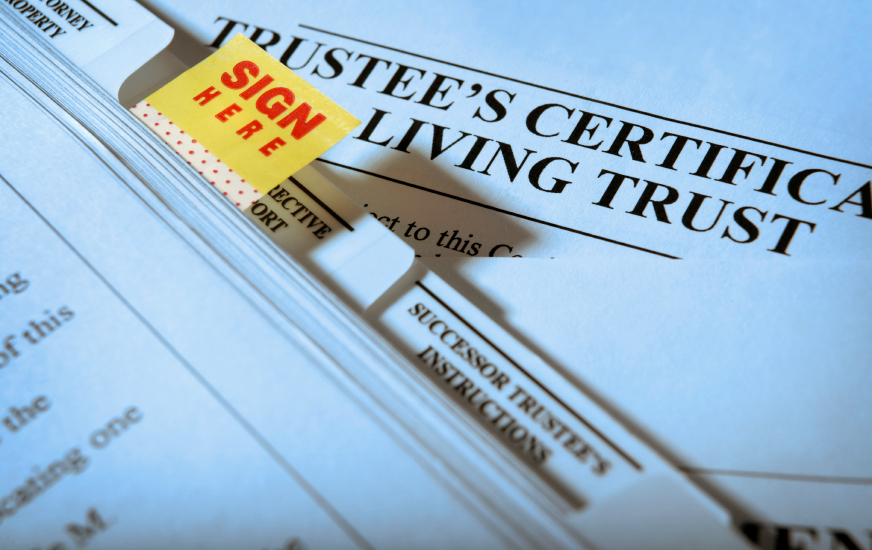
The last few generations have seen an immense growth in wealth that can be transferred to family members. They have also seen an increase in the types of temptations available to those family members: More drugs, more frivolous items to spend on, more high-risk business opportunities that don’t pan out. So wealthy family members leave these bequests using trusts, so the funds may be protected from the beneficiary, for the beneficiary. But what happens when a beneficiary can’t find their copy of the trust, and what rights does that beneficiary have over those funds? I see this problem at least once per week: The beneficiary’s parent / grandparent / uncle left them funds in a trust, but the beneficiary

Parents who have gone through the estate planning process typically ask what information they should share with their children and when. The answer requires balancing many factors, but can be boiled down to a simple concept: Take responsibility and own up to your decisions, and don’t leave it to your kids to fight about it. First, if a child has been left out of a Will or is receiving less money than other siblings you may want to tell them so, and why. Clearly this is not a universal approach, but taking responsibility and informing them up-front allows the child to reconcile this fact. This will also help minimize your other children having to deal with the dispossessed child’s bitterness

If you have a prenuptial agreement, chances are that the family law attorney who represented you betrayed you and didn’t even realize it. I often tell clients to get a prenup if they are getting married later in life, and insist my older clients pay for their child’s prenup. And soon thereafter, much to my dismay, I see yet another prenup that unintentionally-yet-completely screws my client if his or her spouse dies unexpectedly. Prenups serve one vital purpose: “Split Money.” There is usually a financial disparity between the parties when the couple marries, so the wealthier spouse naturally wants to protect his or her money from the other spouse’s financial grasp after a short marriage. So the prenup

In a world where our assets are constantly under threat from usurious taxes, government largess, financial predators and rapacious offspring, there is still NO worse threat to intergenerational family wealth than a second wife. People get married the first time for any one of a number of reasons: Family pressure, filling a void, the urge to have children, an inexplicable desire to emulate the lives of Al and Peg Bundy and passion. But these first marriages often end, sometimes with children left in their wake, and are replaced by a second marriage based on love, devotion and emotional security. In these second (or third) marriages, often one spouse tends to be significantly older and more financially secure than

One of my dearest aging clients have a dog named Bo Bo. Bo Bo is a true companion to this couple: They are in their 90s and have outlived many of their friends, the husband is more mobile than his wife and likes to get physical activity by walking Bo Bo, and the dog is absolutely in love with them. Bo Bo also smells bad, barks at the littlest disturbance, is a manic that constantly jumps on visitors, (and gets slobber and fur on my suit, which needs to be dry cleaned after every single visit) and is begrudgingly tolerated (at best) by anyone other than my clients. Unfortunately, when my clients pass to the eternal human boneyard, Bo Bo’s

As I have discussed in the past, https://www.investopedia.com/advisor-network/articles/only-3-reasons-why-you-should-have-irrevocable-trust/ there are three reasons to create irrevocable trusts. The word “Irrevocable” usually implies no ability to change, and most people believe that a Trustee is required to adhere to the language contained in the irrevocable trust, even though times and circumstances may have changed. Nonetheless, in many circumstances, irrevocable trusts may actually be legally changed, modified or revoked in New York State. ALL PARTIES AGREE TO MODIFY: The first circumstance exists when the Grantor of the Trust is still alive, wants to make a change and ALL the beneficiaries of the Trust agree with the proposed change. In this case, an amendment of the Trust or a revocation can be done –

If you have immediate family members whom you love, it is assumed you will leave most of your estate to them. In this case, leaving a few hundred dollars to a distant niece or friend is rightly viewed as an unnecessary sign of respect and kindness. But beware: The amount of time, legal fees and other costs associated with giving a $1,000 bequest in your Will can cost as much as leaving a $50,000 to that beneficiary. In fact, leaving small gifts to people using your Will is a sure way to increase your legal fees in New York, oftentimes incurring more expenses to send the gift than the amount of the gift itself: Cost of Mailing Notice (Required):
At some level, American Wills have not changed much in the last 200 years: Just like in old-timey England you need to (1) state who gets what, particularly anything left-over (your residuary estate), (2) who shall manage your estate’s affairs (your Executor), (3) you need to sign your Will or have someone do it for you in your presence with your permission if you don’t do so yourself, and (4) you need two disinterested witnesses who sign your Will in your presence as you state it is your Will. However, there are a few modern developments and government programs that justify adding the following provisions to even the most routine Wills: Contingent Ownership of a 529 Plan: If you
A joint trust is a trust created during your lifetime, where both you and at least one other individual are the Grantors (creators). These are almost always “inter vivos” (created during your life, and not by a will upon your passing), and tend to be done by happily married spouses. While they tend to simplify most people’s estate plans by only having to deal with one document, joint trusts also have a time and a place when they should be avoided. The most ideal time to utilize joint trusts is when the creators of the trust are (1) married, (2) want the same end-result for the funds, and (3) trust the surviving creator to control the funds when he/she
The Trump Administration is about to join forces with a Republican Legislature, meaning there is a huge chance that the federal gift and estate taxes could be repealed. I have heard many of my colleague bemoan the fact that their bread-and—butter (complex estate tax-saving trusts) will become irrelevant, their careers are over, and how they wish they went into Medical School or they are moving to Canada in January or something else equally insane. While trusts have been useful devices to preserve a spouse’s estate tax exemption for Credit Shelter Trust purposes, this has by no means ever been their only purpose. Indeed, plenty of people already have trusts for a multitude of other purposes that shall continue to
Parents: You are responsible for the financial education and well-being of your child. You have more life experience, you are the ones who brought your children into the world, and you are the one leaving your money to them. So take the extra step and make sure you give your children money in a responsible way. We’ve all heard of it: The child who spent all of his inheritance before he received it, the gambler, the substance abuser, spendthrift, and so on. In 2011, I had a 29 year old female client, whom I shall call “Janice” who didn’t have one penny to her name: Janice was living in a homeless shelter, on all types of public assistance, and almost thoroughly ignored
I meet several clients who, upon death, want to automatically give their daughters their jewelry and split their remaining property equally between their children. This is also the default position suggested by general practitioner attorneys who will draft a two page Will for their lifetime client, and avoid the consultation time needed to truly understand their client’s desires. My experience suggests that serious consideration must be given to distributing the correct amount of property, and the right type of property, to each beneficiary. Most people leave property first to their spouse, then to their children equally – they have equated equally loving their children with bequeathing them equal amounts of property. It goes without saying that even in “healthy” families this may not be
Most client I meet with name their most trusted family member or friend to serve as Executor of their Will when they pass away. Upon their death that person usually does serve; I would say approximately 90% of proposed Executors do serve in this position (if they themselves are still alive). These people think it will be “fun”, or that they “deserve to be in control” of the Probate. And then the wheels fall off: The Executor finds out that the decedent was a hoarder and has to clean out dumpsters of worthless garbage; beneficiaries fight, are impatient and ungrateful; collecting assets is hampered because they weren’t in easy-to-find places; the Executor lives in Los Angeles, but the decedent’s estate is being Probated
As followers of my blog know, I am a proponent of passing property using a Trust instead of a Will. While a Will is a contract between the deceased individual and the State in which it is Probated, Trusts are contacts between the Creator and Trustee of the trust. Wills submitted to the Surrogate’s Court are public knowledge (as are the decedent’s assets), while Trusts are private documents. It is this last point that we are discussing here. In order to make a Trust “effective” you have to fund the Trust. The owner on the Deed is now “The John Doe Revocable Trust” (not “John Doe”); the beneficiary of the life insurance policy is likewise the Trust. An unfunded Trust is more effective
Attention parents with assets: Tell your children they must have a prenuptial agreement! And when they respond “No, I love him, that is not romantic, we will be together forever!”……panic!!! Then take a breath…PANIC a little more, then contact your T&E attorney to discuss how to protect your family assets using a family trust with a suitable trustee. The Family Court (more appropriately called the “Divorce and Fleece Court”) is known as a “court of equity”, meaning it can look at any factor relating to assets and income, and make a completely subjective (some may say arbitrary) decision as to who gets what. When a child is too shy or stubborn to get a prenuptial agreement, it is your job
While single men tend to pass away at younger ages on average than married men, I have met a number of aging single men without children. Unlike aging single women, who tend to both emote their needs and take steps to elicit sympathy and the help they require, aging single men tend to continue toughening up, not ask for help from others, and ignore seemingly unimportant health concerns that turn out to be rather serious. Single men often do not age well, are financial targets, and tend to do age without the familial concerns their female counterparts receive. They also tend not to ask their male friends for help. If you have an uncle, brother or male friend who doesn’t
Too many attorneys make the mistake of not informing a person’s Power of Attorney, Health Care Agent or Executor that he/she has been named as a person’s agent or, even worse, not telling a client how to inform these people of their responsibilities. These practitioners appear to have the attitude of “I’ve been paid, you have your legal documents, let’s both move onto the next thing in our lives.” While this does not rise to the level of legal malpractice, it certainly is inconsiderate and potentially dangerous: These documents are not public record. If there is an emergency, how is a Health Care Agent going to be identified by the admitting health care facility? The documents may be hard to
My study group of like-minded Trusts and estates attorneys recently got together to discuss the ins-and-outs of ILITs. After a somewhat half-hearted review of the features and benefits of these trusts, we slowly realized the sad truth: It was time to bury these time-honored tax-saving mechanisms. An Irrevocable Life Insurance Trust (“ILIT”) is—surprise—an irrevocable trust that both owns and is the beneficiary of a life insurance policy. When estate tax exemptions were much lower several years ago, meaning that more people were paying a “death tax,” these trusts were ideal because, at death, the life insurance policy was paid to the trust and, when done correctly, transferred the proceeds free from estate taxes. This, coupled with the absence of income
A new year is upon us, and for those of us in the estate planning world it is time to define who we are and what we shall do in the coming months. The modern concept of the American attorney who specializes in tax, trusts and estates dates back to 1913, the year the Sixteenth Amendment of our Constitution was ratified, allowing the federal government to tax people’s income. This was followed by the Revenue Act of 1916, allowing a “death tax” on people’s estates. For one hundred years the profession has concerned itself with using exemptions, loopholes and other transfer mechanisms focused primarily on maintaining intergenerational wealth by saving money on taxes. For the umpteenth year in a row
A testamentary trust is not applicable until (1) you pass away, (2) your will is successfully admitted to probate, and (3) the trustee establishes a trust account with funds delivered by the will’s executor. But what kind of property should you have distributed via these trusts? The advice of many estate planning attorneys is to transfer as little as possible by will: Probate requires: a good deal of paperwork notice to a potentially large number of familial and beneficial parties, a court clerk approval of submission of the will, the court’s over-all approval, etc. Probate also has a sliding scale for court filing fees, is a public affair, and takes a good deal of time to administer. Meanwhile, transferring property
Several client or their spouses are immigrants who are not US Citizens or have several foreign family members. This poses several costs and challenges when choosing to pass property, and should lead one to ask if they should have property pass by a Trust or by Probating a Will. The following issues apply for people who reside overseas and do not pay US taxes, also known as “Non-US Persons.” Remember that having/opening a Trust avoids all of these costs: A Trust does not pass through Probate, does not require a Court to approve a foreign Trustee, and assets are distributed much more quickly and at less cost. First, any person who is a Non-US Person cannot serve alone as an