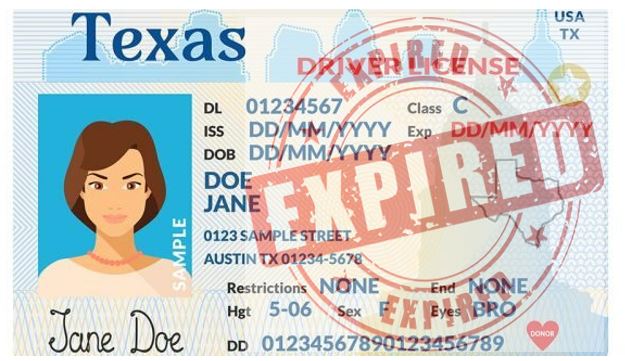
Don’t Let Aunt Mildred’s Photo ID Expire

You will need valid photo identification for the remainder of your life. From signing legal documents to opening new bank accounts, government offices and financial organizations require valid picture identification to legally transact business. So it is concerning to learn that most elderly individuals do not have any valid photo ID, and downright frustrating to realize this lack of legal photo identification can cost families tens of thousands of dollars during the last years of their loved ones’ lives.   As we age, our photo identification expires and is not renewed for mostly predictable reasons: People no longer plan on traveling so they do not renew their passport, they move in with a family member or to an assisted living

Read More

Living Wills in New York May be Useless

There are few rational reasons to having a Living Will in New York, almost no legal benefits to having one, and Living Wills may cause more confusion than guidance in your final days of life. There are several misperceptions concerning what a Living Will actually is. For starters, the very name “Living Will” is a misnomer: It is neither a living document (because it discusses your desire to have someone “pull the plug” on life sustaining measures), nor is it a will (a document which distributes property upon your death). Some people refer to this document as an “Advanced Directive”, but I am pretty sure the Advanced Directive is a Star Trek term regarding Captain Kirk’s alien kissing fetish or

Read More

When Should I NOT Act as Mom’s Executor?

When your mom passes away with a valid Will and property being transferred by that Will, the Will is submitted to the Court who appoints an estate representative to wrap up her final affairs. This person or company – almost always named in the Will – is known as the Executor, and has the ability to do everything that your mom could do during her life: Collect her assets, pay creditors, review all of mom’s financial records and statements, file income tax returns, order her medical records, distribute her property as mom’s Will states, and even clean out mom’s closet (which she likely neglected to do before she died since, you know, she’s now dead). We say an Executor “steps

Read More

Unsigned Wills Are Meaningless (and Photocopies are Not Much Better)

I like to remind people that the laws regarding modern U.S. Wills, not only predate the founding of the U.S., but actually predate European discovery of the Western Hemisphere. In Olde England in the city of York having a signed, witnessed piece of paper instructing how you wanted your property to be distributed after your death was often the only way to ensure your desires were fulfilled. Original paper mattered back then – there were no other recording devices or accounts with beneficiary designations – and witnesses would later attest to the fact they had seen you sign said paper instead of someone else. And original, signed paper still matters for several legal documents today, including your Will. The issue

Read More

Codicils and Trust Amendments May Burn Your Estate

Hiring an attorney has been obnoxiously expensive since the first time a guy’s donkey backing into another guy’s mud version of today’s tiny houses: You tend to want a person or document that best insures you are going to get things done your way, but good results cost a lot of money. So, it is not surprising that people prefer to change their Wills using Codicils and Trust Amendments instead of redrafting the entire original document. I have concluded this is often a mistake and now believe clients should spring for the costs of redrafting their entire document. Codicils are quick changes to existing Wills, and only modify the portions they are intended to change (and maintain the remaining contents

Read More

Requiem for Stan Lee: Superhero of the Superheroes

As a former collector of Bronze-Age Marvel comic books, I was sad to hear of the passing of Stan Lee. As the creator or co-creator of so many comic book characters – the Fantastic Four, the Incredible Hulk, Spider Man, Iron Man, the Avengers, the Uncanny X-Men, Doctor Strange, the list goes on – Lee is one of the most meaningful entertainment influencers of our era. True, Lee owed a great debt to his prolific co-creators (and arguably more talented artists), such as Jack Kirby and Steve Ditko, but even though Lee’s style often promoted himself instead of Marvel and anyone else that made Marvel Comics the cultural juggernaut it has become, everyone from once-teenage comic collectors, to Disney executives

Read More

Angry Brothers Agree to Settle (Mom’s Estate)

You never know how close you are to your family until you have to share an inheritance with them. I am wrapping-up a case where my client’s mother died, leaving a Will that equally-distributed her real estate between her two somewhat-acrimonious sons. Usually this apartment would be sold, proceeds disbursed, and everyone would go their separate way. However, my client’s brother insisted that he could make them more money if he improved the real estate. His brother (my client) was not so hip on this idea – none of them had any real estate investing experience – but through sheer force, perseverance and presumption his brother had his own son move in (which he did – with a few kewl

Read More

How the Probate Court Screws You if You are Old (OR: How to Screw Over Your Family if You Are Disinherited in the Will): Personal Service and New York Surrogate’s Court

Many people have a horror story, how Probating your family member’s Will took years, was a pain in the neck, and Aunt Mildred’s lawyer was to blame. And this is often at least partially true: New York Probates can have unusual complexities that will blindside an unsuspecting attorney. In my last blog I gave several reasons why the Court itself is usually to blame. Now I would like to focus on one way the system itself is faulty: New York’s Surrogate’s Court requires personal service on the next-of-kin.   When a person dies and their Will is being submitted to New York’s Surrogate’s Court it must include (among other things) an original Death Certificate, a Petition requesting the Court to

Read More

Life-Draining Probate? It’s Probably the Court’s Fault

There are many, many attorneys who are not experienced in handling New York Surrogate’s Court cases or qualified to handle anything except the easiest Probate. This article isn’t about them. This article is about how an agonizingly-long, Probate of a Will is most likely the Court’s fault.   New York’s Surrogate’s Court used to be the Unified Court System’s neat china doll in a house full of dirty toys: Every clerk in every county was professional, smart and helpful (except Queens County, they were awful), Probates moved forward quickly, and questions were answered on the spot. Yes, certain counties did things “their way” (I.e. NOT the way the Surrogate’s Court Procedures Act outlines how Probate should be administered), but not

Read More

Should I Share My Will with My Financial Advisor?

And the answer is: No. Usually. See you next week.   Okay, okay, I’ll elaborate.   Your Last Will and Testament is a confidential document while you are alive. When you pass away your Will may be Probated in a court – at which time it’s contents are publicly available – so that your estate’s assets are properly distributed to your choice of beneficiaries.   So only you and your lawyer have access to the contents of your Will. Disinherit your son? He can’t find out while you are alive. Have more assets than your family knows about? They shall continue to live in ignorance. Don’t trust third parties with access to your confidential information? No problem, nothing to see

Read More

Don’t Leave Money to Charity Using Your Will

Charities receive some of their largest gifts upon the passing of a benefactor. While this is a kind gesture on your part, if you live in New York you should leave money to your preferred charity using any method other than your Will.   Probate is Annoying: Probating a Will requires New York’s involvement, meaning Probate can be an expensive, tedious and slow process. You will need to both place the charity on notice that they are a beneficiary under the Will, send them their funds, and procure a Release from the charity. All of this takes time, meaning an attorney is billing for all of this.   Attorney General’s Involvement: As if New York’s courts weren’t inefficient enough for

Read More

Second Wives: Reapers of Sorrow, Destroyers of Family Wealth!

In a world where our assets are constantly under threat from usurious taxes, government largess, financial predators and rapacious offspring, there is still NO worse threat to intergenerational family wealth than a second wife.   People get married the first time for any one of a number of reasons: Family pressure, filling a void, the urge to have children, an inexplicable desire to emulate the lives of Al and Peg Bundy and passion.  But these first marriages often end, sometimes with children left in their wake, and are replaced by a second marriage based on love, devotion and emotional security.   In these second (or third) marriages, often one spouse tends to be significantly older and more financially secure than

Read More

“Name That Witness” (to Your Will)

When you execute your Will you MUST have it witnessed by at least two competent adults who are not beneficiaries in the Will. When you die New York’s Surrogate’s Courts require the names of the witnesses to be listed in the Probate Petition. And so it is nothing short of stupefying to me how many Wills have witness signatures that are completely illegible. This is somewhat understandable if you execute your own Will, since non-attorneys are not in the business of drafting Wills.  The signers of illegible signatures are also more easily identified in the event it was the Testator’s friends or neighbors who signed (and thus the identities of the witnesses are more easily deduced). But many attorneys’ witnesses

Read More

What is the New York Public Administrator?

The New York Public Administrator is one of a chosen office of attorneys in each county that the Surrogate’s Court often calls upon to administer to non-standard probates and estate administrations. The Public Administrator generally has the job of handling estates of people who die without a Will and who have no close relatives who are able to administer the estate: If your nearest living relative is a cousin (or more distant) the Public Administrator will need to be placed on notice, and usually handles the estate if there is no Will in these circumstances. In addition, the Public Administrator often replaces initial Executors or Administrators who are unable to qualify or unable to serve due to being felons, having

Read More

5 Reasons to Avoid Giving Small Gifts in Your Will

If you have immediate family members whom you love,  it is assumed you will leave most of your estate to them. In this case, leaving a few hundred dollars to a distant niece or friend is rightly viewed as an unnecessary sign of respect and kindness. But beware: The amount of time, legal fees and other costs associated with giving a $1,000 bequest in your Will can cost as much as leaving a $50,000 to that beneficiary. In fact, leaving small gifts to people using your Will is a sure way to increase your legal fees in New York, oftentimes incurring more expenses to send the gift than the amount of the gift itself:   Cost of Mailing Notice (Required):

Read More

Increase Executor Commissions by Including Real Estate Transfers

You have a good deal of latitude structuring Executor’s commissions in a Will. There are many subtleties to default Executor commissions that apply if you don’t substitute them; in order to be fair to your Executor, one that you may want to modify relates to instructing your Executor to transfer real estate under the terms of your will.   In New York, Executor commissions are based on collecting and distributing property, primarily intangible investments. These commissions are easy to calculate, since investment assets are easy to price, transfer and sell. But the family home – typically the largest Probate asset – is not so easy to administer, and is not always commissionable.   If the real estate is sold as

Read More

5 Special Provisions You Should Add to Your Will

At some level, American Wills have not changed much in the last 200 years: Just like in old-timey England you need to (1) state who gets what, particularly anything left-over (your residuary estate), (2) who shall manage your estate’s affairs (your Executor), (3) you need to sign your Will or have someone do it for you in your presence with your permission if you don’t do so yourself, and (4) you need two disinterested witnesses who sign your Will in your presence as you state it is your Will. However, there are a few modern developments and government programs that justify adding the following provisions to even the most routine Wills:   Contingent Ownership of a 529 Plan: If you

Read More

Turnover Proceedings: Retribution for First Come, First Served

The early bird often gets the worm, even if he was not supposed to. When a person passes away many people have a tendency of ransacking the decedent’s property. Co-Signers often run to the bank to empty the safe deposit box (which is illegal in New York), people with access to the house take all types of personal belongings, and some absconders legally use the decedent’s credit cards. Outsiders may redirect mail containing financial information to their own addresses, then act as they see fit. Other times people will have an incapacitated person sign a Power of Attorney or blank checks, or even forge the signature. When that person dies the property that was supposed to go to one person goes to someone else. I

Read More

Destroy Your Old Will! Avoiding Problematic Probates

To probate a will you typically need the original document for the courts to commence the legal proceeding. Unlike Trusts, LLC Operating Agreements, Powers of Attorney, etc., where a copy shall typically suffice, a valid will is expected to be an original will. So what happens when there are two original wills that differ from one another?   It’s more expensive: The first sentence of 99.9% of all wills is “I hereby revoke all wills and codicils.” This means that any previous version of an will is superseded by the new, most recent will. It also means that those parties who have been adversely-affected by the new will, must be given formal legal notice of the new will being offered

Read More

Contracts: Your Will and the Probate Process

Many people aren’t aware of the number of contracts that apply to them every day. Like all contracts, there are at least two parties to any given contract: Your bank account was opened by signing a contract under the bank’s terms; your attendance at the Yankee game is contingent on you following the 2 point font contractual terms on the back of the ticket; the credit card receipt you signed to pay for lunch today is a contract; even the US Constitution is a contract between “we the people” and the US government (though many would say one party is gravely in breach of their end of the bargain, but that is for someone else’s blog to address). Your Last

Read More

Dealing With the Unthinkable: Handling Affairs After the Death of an Adult Child

I was 4 years old when my father passed away. This obviously caused me a great deal of childhood trauma, and the associated financial and emotional cost to my family to “rehabilitate” me was substantial. Only as I have aged and entered this profession have I become aware that his death seriously affected many other people in the family, not least of which was my mother. But instead of choosing the more obvious individuals, let’s discuss the strain that affected his parents, my grandparents. Depending on the family’s financial dynamic, the loss of an adult child can be absolutely devastating: Some parents have placed an enormous amount of resources on raising that child, and may have sacrificed to the point

Read More

PROBATE: Beware the Court Clerk!

For those of you that missed it, my March 26th blog post spoke of the importance of being exceedingly nice to court clerks while initiating the Probate process. The clerk is (a) extremely knowledgeable as to how Probate works, (b) the gatekeeper and only individual who can begin the proceeding, and (c) a human being with feelings. As such, treat them with respect. That is not what this blog post shall cover. Clerks, like all people, are human beings and human beings are fallible. You have to understand and accept this fact, or your visits to the Surrogate’s Court will end in you wanting to drown your bad mood at the nearest Happy Hour. I have had clerks tell me

Read More

PROBATE: Be Nice to the Court Clerk!

When a person passes away, New York requires the Will and other paperwork be filed with a law clerk, in the Surrogate’s Court in the County in which the Probate Proceeding will be held. And while the Surrogate’s Court Procedures Act explains how such legal matters are supposed to proceed, each county is somewhat different as to how these requirements should be met. While these differences may frustrate an attorney unfamiliar with a certain county’s requirements, it tends to drive “Pro Se” participants (I.e. the “Do It Yourselfers” who are not attorneys) to the brink of insanity. And when people act irrationally, the administering clerk will likely transform from helpful to defensive. I was in one of these courts today

Read More

Handling the Empty Nest: Securing the Recently Departed Loved One’s House

When a person passes away there are several matters to take care of, the FIRST of which is securing the premises. One of my biggest concerns is the possible “Dash and Grab” that dishonest (needy?) family members perform when they hear of the recently departed family member and run to strip the house of assets with financial or sentimental value. And, as much as I hate to use stale idioms, “Possession IS 9/10ths of the law.” Here are steps you can take to secure a family member’s personal belongings upon their passing: CHANGE THE LOCKS: If the house was owned by the decedent, consider doing this to protect the property inside. CANCEL CREDIT CARDS / FREEZE BANK ACCOUNTS: Supplying a

Read More

DISCLAIMER: Attorney Advertising. Please note that prior results do not guarantee a similar outcome. This site and any information contained herein are intended for informational purposes only and should not be construed as legal advice. Seek competent legal counsel for advice on any legal matter.